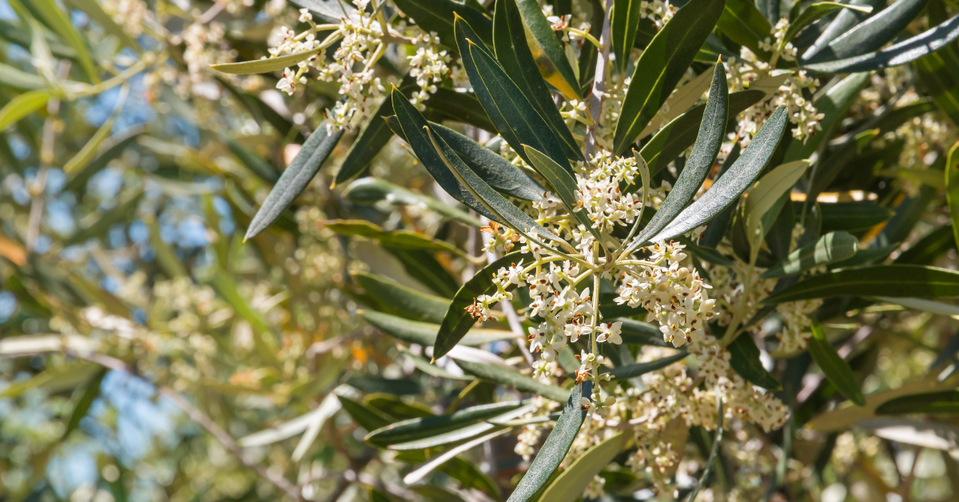
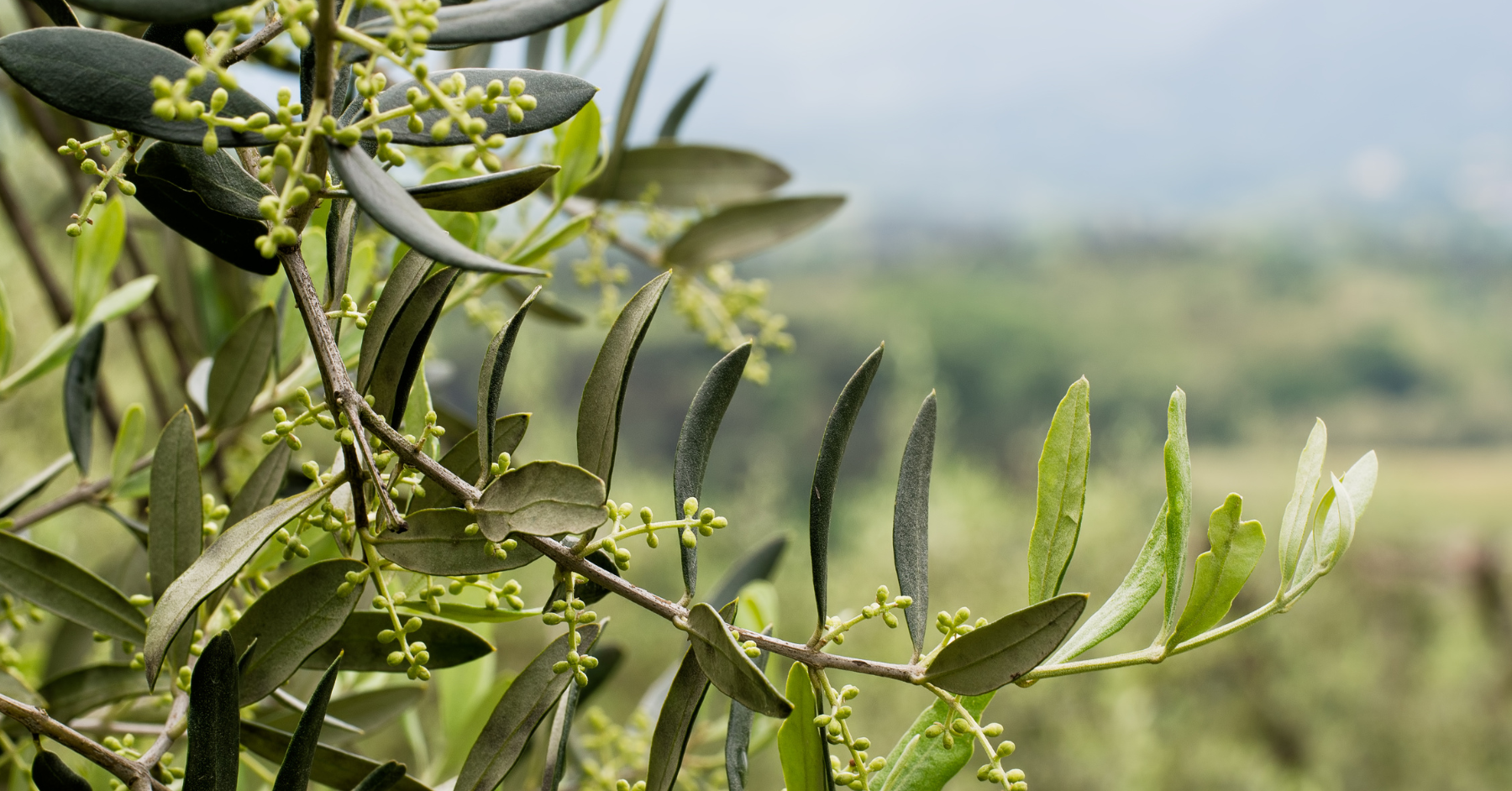
Now that pruning is complete, the olive tree enters its most important phase for us: flowering and fruit set.
This is the period of most intensive nutrient consumption — the tree draws heavily on its accumulated reserves and elements.
Young olive trees
Young trees are more sensitive and require special attention during this period. Here is what needs to be done:
- Protection against olive moth and jasmine moth
- Irrigation as needed, depending on soil condition and weather
- Weed removal around young trees
- Mulch the soil around the tree with grass clippings, sawdust or similar materials.
Bearing olive trees
Given the tree’s increased demands at this stage, it needs our support to deliver the best possible results.
The most important nutrients for successful pollination and fruit development are nitrogen (N), phosphorus (P) and boron (B).
Foliar feeding is applied using amino acids and micronutrients, with particular emphasis on boron (B). It can be carried out before flowering (7 days prior) or after fruit set.
Protection against olive moth
The olive moth (Prays oleae) is one of the most significant threats to the harvest during this period. Treatment must be timed correctly — the moth attacks the flower, causing blossom drop and direct yield loss.
Irrigation
Irrigation is recommended while temperatures have not yet reached their summer peak. Morning hours are most suitable — water is absorbed more effectively and evaporation is minimal.